The Hard Truth: Aging Schools, Declining Enrollment and Rising Costs Shape Capital Budget
Posted On October 15, 2026
The Montgomery County Board of Education received an informational report on the proposed Fiscal Year (FY) 2028 Capital Budget and amendments to the FY 2027–2032 Capital Improvements Program (CIP) on Thursday, Oct. 15. Because FY 2028 is an "off-year" amendment cycle, the proposal focuses on targeted adjustments to the existing capital plan rather than a comprehensive review of all projects. But the presentation also delivered a much larger message: The hard truth is that MCPS faces difficult decisions about aging schools, declining enrollment and rising construction costs. With limited resources and growing infrastructure needs, the district must rethink how it invests in its facilities to provide safe, healthy and equitable learning and working environments. Doing nothing is not an option.
Of the 126 schools built or last renovated before 2000, approximately three out of four are rated as needing repairs or having unreliable building systems. These are not simply building problems. They affect the classrooms where students learn and the environments where our employees work every day.
Another hard truth: enrollment continues to decline. Preliminary enrollment for this school year (2026–2027) is 151,967 students, a decrease of 4,083 students in just one year. Current projections anticipate enrollment falling to approximately 143,479 students in six years and 137,825 in 10 years.
Fewer students, unevenly distributed enrollment and aging buildings mean MCPS must rethink how it uses its facilities and resources, while continuing to provide excellent educational opportunities.
The hard truth is that construction costs are rising, and our dollars are buying less. A complete high school HVAC replacement, previously estimated at $30 million to $35 million, is now projected to cost $45 million to $55 million. These increases are forcing changes to project schedules and limiting how many improvements can move forward.
Targeted Amendments: Investing in Critical Infrastructure
The superintendent's recommended six-year CIP totals $1.879 billion, an increase of $25 million over the currently approved program. Again, FY 2028 is an "off-year" amendment cycle so the proposal maintains previously approved funding levels for all projects, with just two targeted increases focused on essential operational infrastructure:
- $23 million for warehouse improvements: MCPS is seeking funding to build out modern warehouse space to replace aging, inadequate facilities that no longer meet the needs of a large school system. The current warehouse, constructed using salvaged materials from the World War II era, is undersized, inefficient and in poor condition. Modern facilities would improve working conditions, protect educational materials and strengthen the district's ability to support schools.
- $2 million for facility planning: This investment would support two important initiatives:
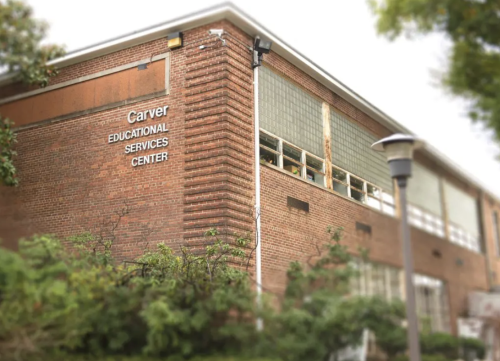
- Exploring Public-Private Partnerships (P3): A P3 is an approach in which a public agency partners with private-sector organizations to help finance, design, construct or maintain facilities. MCPS is exploring whether this model could help accelerate school construction and provide a more cost-effective approach to replacing the aging Carver Educational Services Center (CESC), one of the district's central office headquarters. Staff deserve safe, healthy and modern workplaces, just as students deserve quality learning environments. Exploring alternative financing and construction approaches could help MCPS address these needs more efficiently.
- Col. Zadok Magruder High School Feasibility Study: Funding would support an evaluation of the school's facility needs and potential improvement options, helping inform future decisions about capital investments.
NOTE: No changes to individual school construction projects are recommended in this amendment cycle.
These targeted investments reflect a larger reality: MCPS cannot continue relying on aging infrastructure, temporary fixes and traditional approaches alone to meet the needs of a changing school system.
Why It Matters
The hard truth is that doing nothing is not an option. Every dollar invested in maintaining an underused or deteriorating facility must be weighed against other urgent needs across the school system. Delaying necessary improvements can mean higher costs, worsening building conditions and fewer opportunities to invest in students.
What comes next: The Board will continue reviewing the proposed CIP, with public hearings scheduled for Oct. 26–27 and additional work sessions in November. Board action is scheduled for Nov. 19.
The bottom line: The hard truth is that the challenges facing MCPS did not develop overnight, and they will not be solved overnight. Postponing difficult decisions will make them more expensive and harder to address.
View the FY 2028 CIP Slides.
Watch the meeting here.
